Tumble dryer: who it suits, and who it doesn't
A tumble dryer earns its keep in any home where line drying is unreliable, which in Britain is most of them. If you have children, a busy household, a flat with no garden, or you simply want school uniforms and work shirts dry by morning, a dryer is one of the most genuinely useful appliances you can own. It also frees up space: no more clothes horse permanently parked in the spare room, and no washing hung over radiators raising the humidity in your home, which can encourage damp and mould.
It is only fair to be honest about the trade-offs. A dryer adds to your electricity bill, and the cheaper the machine is to buy, the more it tends to cost to run. Some delicate items still should not go in a dryer at all. But modern heat pump dryers have changed the maths: they use roughly half the electricity of the old vented and condenser machines, and they dry at a gentler temperature that is far kinder to clothes. For most homes that does plenty of washing, a good dryer pays for itself in convenience and, increasingly, in lower running costs too.
The decision that matters most: heat pump or condenser?
Before you compare brands, decide on the type of dryer, because that choice affects your bills more than any badge. There are three kinds: vented (the old type that blows warm, damp air out through a hose), condenser (which collects the moisture in a tank instead of venting) and heat pump (a more efficient kind of condenser dryer). All six machines we recommend are condenser or heat pump models, so none needs an external vent and all can sit anywhere with a socket.
The real choice is between a standard condenser dryer and a heat pump dryer:
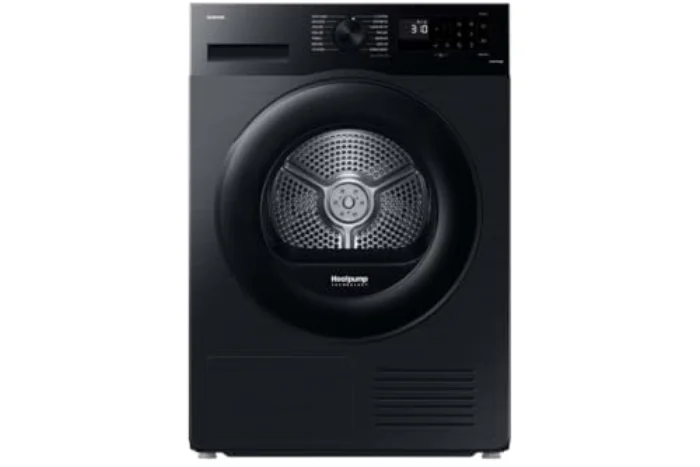
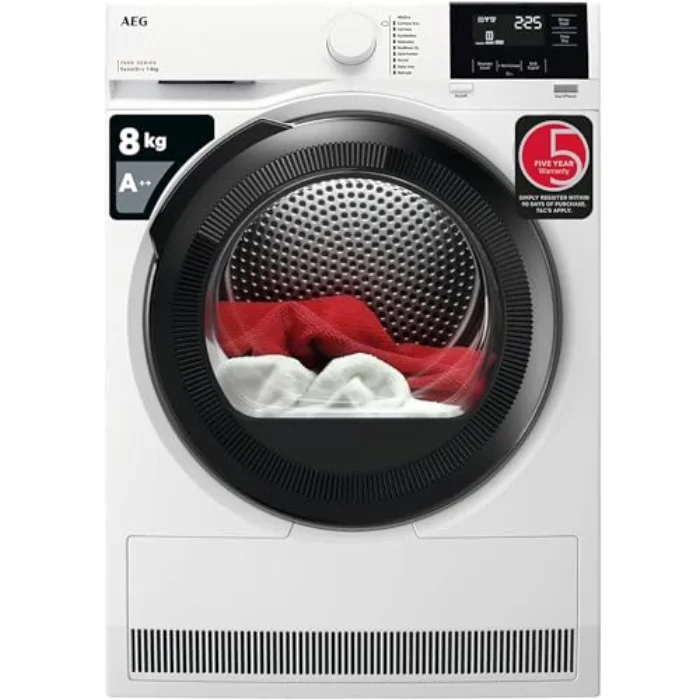
- Heat pump dryer: recycles its own warm air instead of heating fresh air from cold, so it uses about half the electricity and dries at a lower, gentler temperature. It costs more to buy and dries a little more slowly. Best for frequent use. Examples: the Bosch Series 6, the Samsung Series 5 and the premium AEG 7000 Series.
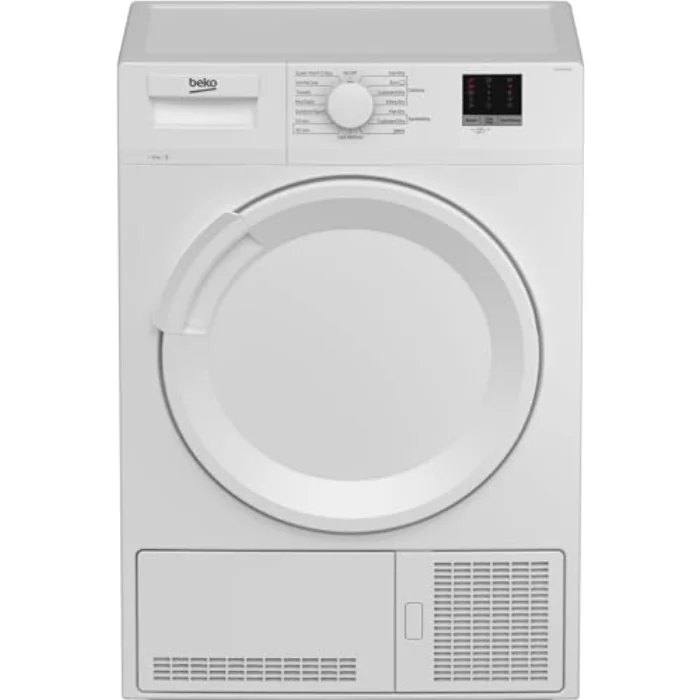
- Condenser dryer: cheaper to buy and a bit faster, but uses more electricity, so it costs more over its lifetime. Best for occasional use or a tight budget. Example: the Beko DTLCE70051W.
As a rule of thumb, the more loads you dry, the more a heat pump dryer makes sense, because the running-cost saving steadily pays back the higher purchase price. If you only dry now and then, a condenser dryer's lower upfront cost may win. Our full heat pump vs condenser guide walks through the maths in detail.
Get the capacity right for your household
Capacity is the second big decision, and the trick is to match the drum to your washing machine and your real loads rather than buying the biggest you can find. Wet clothes take up more room than dry ones and need to tumble freely to dry evenly, so a dryer that is the same size as your washer, or a touch larger, handles a full wash comfortably. As a guide:
Crucially, bigger is not automatically better. A drum far larger than your usual loads wastes energy and takes up more room, so there is no point buying 9 kg if you mostly dry small loads. Our capacity guide helps you size the dryer to your laundry, not the other way around.
Running cost: the number behind the sticker price
The cheapest dryer to buy is rarely the cheapest dryer to own. Running cost is driven almost entirely by the energy rating, and the gap is large: a modern A++ or A+++ heat pump dryer uses roughly half the electricity of an older B or C-rated condenser dryer for the same load. Over a year of regular family use, that difference adds up to a meaningful saving, which is exactly how a heat pump model earns back part of its higher purchase price.
Your habits matter too. Spinning your washing at a high speed first wrings out more water, so the dryer has less to do; drying full loads rather than small ones, cleaning the lint filter regularly and using sensor programmes instead of long timers all cut the energy each cycle uses. We pull this together in our guide to the cheapest tumble dryer to run, which ranks the most efficient options and the habits that save the most.
Sensor drying: the feature worth insisting on
If there is one feature to insist on, it is sensor drying. Instead of running a fixed timer, a sensor dryer measures the moisture in the load and stops when the clothes reach the dryness you chose. That avoids over-drying, which both wears out your clothes and wastes electricity, and it means you do not have to guess at cycle lengths. Every machine on our list has it, including the budget Beko, so there is no need to compromise here. The premium AEG 7000 Series takes it furthest with a drum that adapts the temperature to the fabric, gently drying wool and delicates you would normally have to air-dry.
How we chose these six
We deliberately picked machines that cover the full range of real UK needs rather than six near-identical 8 kg dryers. There is a best-in-class all-rounder, a value heat pump, a big-capacity choice, a true budget option, a quiet challenger and a premium gentle dryer. Every model here is from a brand that is genuinely available and supported in the UK, and each one earns its spot for a specific buyer, with no padding. Start by deciding on the type and capacity you need, and you will find your dryer on this list. Our full buying guide covers the rest: energy ratings, drum care, programmes and the features worth paying for.